
I had a visit from the Deep Purple road crew, Ian Hansford and Mick Angus, who had come to collect the Jaguar. It was good to see them again and to hear the story of what they had witnessed. According to Ian and Mick, it was decided before the end of the second US tour that a new singer was needed. I knew that the band would have kept this from me as they knew that I would have insisted on Rod being told, as had happened with Bobby Woodman.
It seems that at the time there was no intention of getting rid of me as well. Mick Underwood reinforced this story, saying when Blackmore approached him in a quest to find a new singer, there had been no mention of a bass player. With Episode Six on the verge of collapse, Mick did not hesitate to recommend Gillan. Obviously, he was now very interested, in contrast to the time when I had offered him the job! Mick and Ian continued with the story of how Gillan was to be brought to the recording studio to learn the song, hence my being told not to return until evening when, according to the roadies, I was to be informed that Ian was joining the band.
When they went to pick up Ian, they were surprised to find Roger Glover with him, apparently “coming for the ride”. Naturally, once in the studio, Roger picked up my bass guitar and the real skullduggery began. As one thing led to another, Jon Lord had instructed the road crew to telephone and stop me returning, with a concocted story of “problems at the studio”, but he was told in no uncertain terms to “do his own dirty work!”.
Of course, Jon had no trouble doing this. I had got the evening off, and the rest, as the saying goes, is history. I thanked Ian and Mick for their loyalty, and for fulfilling in the details. As they departed, I was left trying to get my head around this story. It also appeared that both Gillan and Glover were under contract, so explaining the cover story of fake session players on the record. I felt very angry and also sad that I had been stabbed in the back by the very people that I had trusted the most. I was also disappointed that they did not have the guts to speak to Rod and myself face to face. However, I also knew that I had to get on with life.
Luckily, it was not long before the phone rang with the offer of a job with Marsha Hunt, so I travelled into London for a meeting with her managers at the office of Track Records. After discussing terms, I arranged to rehearse the following week at Studio 51, the old Ken Colyer club where my sister Liz had spent so many happy times back in the thrash jazz and skiffle days.
On July 17th, I had a meeting with Deep Purple’s accountant, Bill Reid. Bill seemed genuinely horrified at the way I had been treated, particularly as my custom-built Marshall amplifiers were held by the group, leaving me without the tools of my trade! He thought that this was immoral and promised to tackle Colletta and Edwards regarding compensation.
Several days later, Rod Evans flew out to the USA. His wedding was scheduled for two weeks’ time when he and his fiancée would be married by the Reverend Presley, a cousin of Elvis. I still had a few possessions at 13, Second Avenue, so I dropped in to retrieve them. When Ritchie Blackmore opened the door, he was obviously shocked to see me standing there. As I brushed past him, he kept his head down and muttered the words, “He’s not as good as you”, obviously referring to my replacement. I simply answered, “I know that, and you know that.” I made my way into the room that I had shared for so long with Jon Lord, and grabbed the few bits and pieces belonging to me, then making for the front door. A very uncomfortable Ritchie tried to say goodbye. Setting my gaze on him, I said, “What was it all about then?”. “Well,” answered Ritchie, “He picked up your bass and one thing led to another.”
The respect that I had had for him evaporated completely and I left Second Avenue for the last time. That very evening, I received a telephone call from his wife Babs saying that Richie did not want to lose my friendship! I said goodbye as politely as possible. Marsha Hunt proved to be a very likeable and attractive looking American lady with a brash, no-nonsense style of talking. She was currently in high demand as a photographic model following her great success in the hit musical “Hair” and hoping to forge a tandem career as a singer. The line-up of her band was a little unusual having no regular drummer but three percussionists playing between them conga drums, tabla and timbale.
The guitarist was an affable Canadian called Steve Hammond. Later to pen a song called “Black Sheep of the Family” for Mick Underwood’s band, Quatermass. Steve regaled me with interesting stories, and we immediately hit it off. Problems arose when we all attempted to play together. It was clear that only conga player Bobby Stignac could keep good time!
Marsha, who was clearly committed to the lineup, shrugged this off as “teething problems”. The rehearsals dragged on for several days with little improvement, as we murdered such tunes as Desdemona, Walk on Gilded Splinters, and Sympathy for the Devil, which was particularly boring for a bass player. I cheered myself up thinking of the retainer and wages, which were quite generous, plus the fact that I was supplied with a 100-watt bass rig. One day I had the welcome relief of playing on a BBC broadcast session for old pal James Royal, without doubt one of the best ever rock singers. Also on the session was keyboard player Rick Wakeman, who approached me afterwards saying that if I ever formed a new group, then he would love to be in it. I filed this information away for future reference!
On August 22nd, the Marsha Hunt band departed for its debut at a festival in Belgium. Rehearsals had not gone well and I was not looking forward to the gig. After showing our passports, we made ourselves comfortable on the ferry, but after a few minutes found ourselves surrounded by police who swiftly marched one of our three drummers off the boat! It appeared that the man, known as Mr. Smith, was in possession of a dodgy passport. Marsha protested loudly to the officers but to no avail, and so he was carted off, never to be seen again. We were off to a bad start already, but secretly I was a bit relieved that only one loose cannon was left to be kept in check. When we arrived at the festival site, it was pouring with rain and the audience were knee-deep in mud. Top of the bill were a new outfit called Humble Pie, featuring Steve Marriott and Peter Frampton.
I wasn’t best pleased to discover that the “new” Deep Purple were also on the bill, and I made a conscious decision to avoid them. When the Marsha Hunt Band attempted their set, I found myself struggling to keep things together without the bottom end of a drum kit, and without doubt our performance was pretty dismal, with not much being said on the journey home. The following day we were to play at the legendary California Ballroom in Dunstable where I had last performed with the Flowerpot Men, whilst Richie Blackmore checked out Jon Lord and myself for the embryonic Deep Purple. This gig was not much better than the last, and before the end I had made the decision to quit. I later explained to Marsha Hunt that I did not think that this line-up could ever work. To my surprise she agreed with me, and then asked me to become her band leader and to recruit some new musicians. This was totally unexpected, and I felt bad about people losing their jobs, but Marsha had finally realized that it was a lost cause and tough measures had to be taken. We both agreed that Bobby Stignac could would stay as he was an excellent player. With one week to go before the next gig, I set about finding a new guitarist and drummer to complete the group.
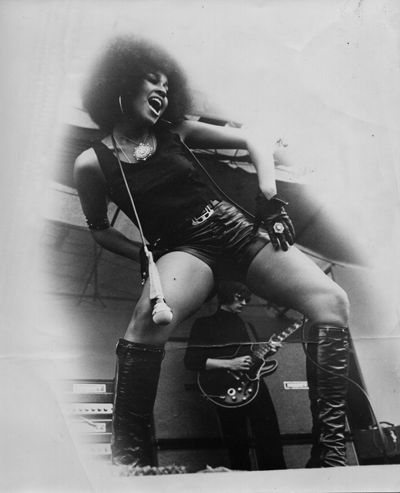
Once again it was a call to my old friend Ged Peck to solve the problem. Ace guitarist Ged just happened to be free and also recommended drummer Pete Phillips as they had worked together with Billy Fury for a while. We all assembled at Studio 51, where the new power trio plus conga drums worked very well indeed. Marsha was extremely pleased and relieved that the sound was good when we began to tour and go down well with audiences. Many of the gigs were on the lucrative college circuit, including quite a few that I had previously played with Deep Purple. After a month or so Marsha became unhappy with Pete’s style of drumming. Now Pete was a fine rock and roll drummer, but Marsha was not happy and asked me to find a replacement. Ged and I both suggested the same name, Roger Pinah, alias Roger Truth, who I had worked with for so long with Buddy Britton, the Bergeracs and Johnny Kidd. Roger jumped at the opportunity and Marsha, of course, was extremely impressed with his ability. As the tour continued with Roger (affectionately known as Solly) laying it down, it became obvious that we were getting a better reaction from our audiences. Marsha would step out sporting her enormous afro hairstyle, wearing a tight t-shirt and even tighter hot pants, the style of the day. She usually came on stage to ribald cat-calls and shouts of “Get ’em off!”, but she was always more than a match for the hecklers!
Following the tradition of the past couple of years, Tuesday nights were usually spent meeting old friends at the Red Lion pub in Brentford, a great music venue, often followed by a trip into London to various clubs. One of the regulars was the Who’s bassist, John Entwistle, and over a few drinks, he asked how things were with Marsha. I replied that she was a pleasure to work with and paid me well, but I had to admit that I wasn’t satisfied musically. John looked over his glass of scotch and offered his advice. “You know what you have to do,” he said, “form a new band and knock everyone out!”. Of course, I thought, it’s bloody obvious!
As soon as possible, I began to proposition a few of my favourite players, including guitarist Albert Lee and drummer Mick Underwood. But although showing interest, they were both on the verge of new ventures themselves. I had hoped to gather some well-known musicians in order to sell the new group, but soon realized that I had to look outside of famous names.
Remembering the approach from Rick Wakeman, I contacted him and he absolutely jumped at it. As Ged Peck and I were already writing songs together, it seemed obvious that he should be in the new outfit, which he was agreeable to. Ged had developed into an amazingly good player and his fast precise picking was admired by many, including Robert Fripp, who told me that he was the best rock guitarist he’d ever seen. Praise indeed. When old mate James Royal heard of my plans, he expressed interest, so I figured that the band was complete, apart from a drummer. Although Solly was recognised as one of the best, I knew that he was not the type to commit to a new venture, with his eye always on a better paying gig if one presented itself.
However, I did have a drummer in mind who I felt sure would come on board. On a whim I visited B. Feldman and Co., the famous London publishing house who had been instrumental in securing the US deal for Deep Purple. I relayed my plans to old friend Ian Kimmett who seemed very interested. Ian said that he would support any venture I was involved in and promised the use of his office as a base for business, so obviously I felt that this would be the best direction to follow.
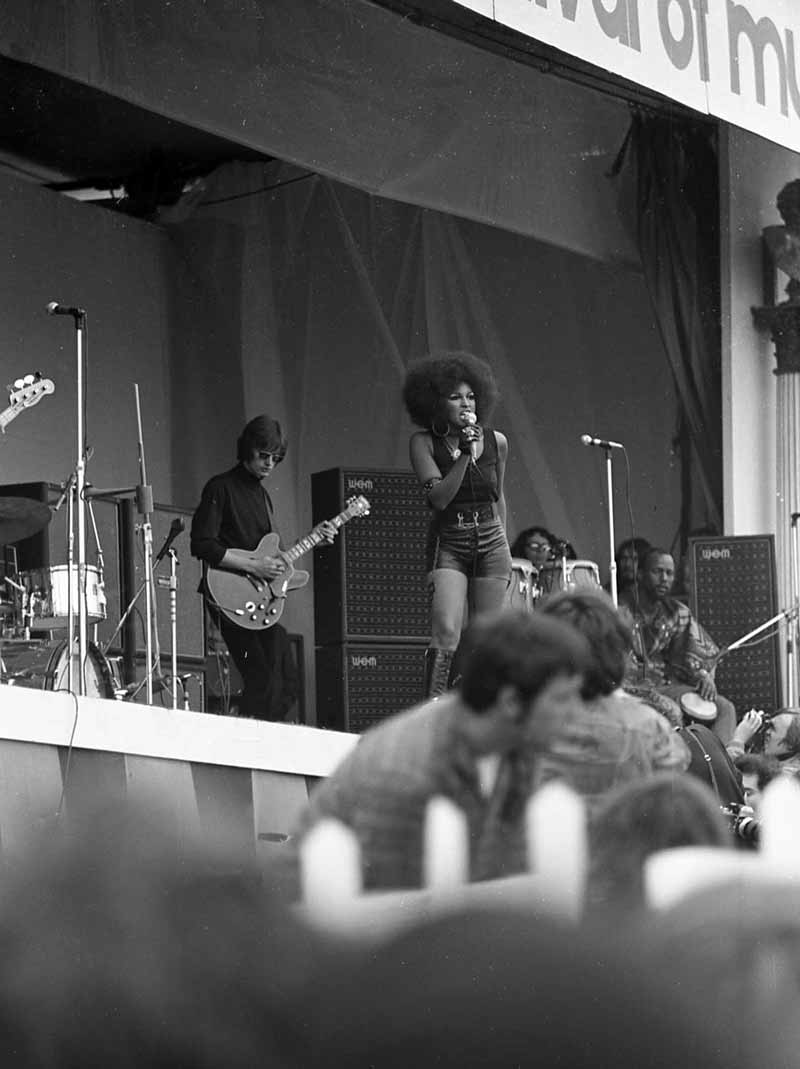
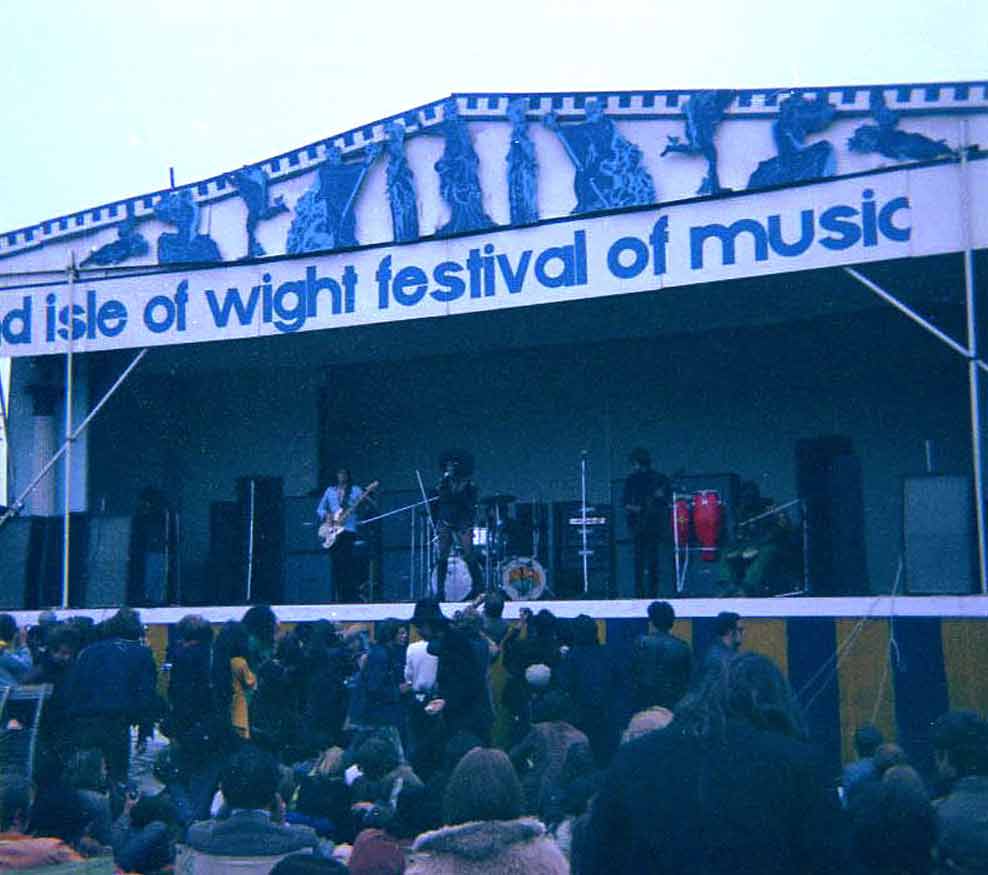
At the end of August, the Marsha Hunt Band played at the Isle of Wight Festival where I met John Entwistle again, as well as reuniting with Mitch Mitchell and Noel Redding who were appearing with Jimi Hendrix. Noel was also launching his new band called Fat Mattress, fronted by ex-Flowerpot Man Neil Landon. Like most open-air festivals, it was a muddy mess with poor toilet facilities and, of course, running well behind schedule. Marsha worked hard to try and inject some life into our show but we were pretty lacklustre by the time we got to perform.
During September, following Rod Evans’ wedding, my girlfriend Janet and I began to plan our own wedding and also started to look for a suitable house to purchase. Life on the road with Marsha Hunt carried on relatively smoothly. She was seeing Mick Jagger who was still married, but this wasn’t often mentioned as it was supposed to be a closely guarded secret.
Whilst we worked regularly with the band it was usually at weekends and so I took advantage of the spare time to resume music theory lessons with my previous teacher, a Southall lady named Mrs. New. Although now playing bass, she insisted that I learn treble clef as well and after a few months she entered me for the Royal Schools of Music examination at grade five. I did feel rather odd as I entered the examination room, being the only twenty-five-year-old student amongst thirty plus others of average age fourteen years! I felt very happy to receive my pass diploma, pushing on with Mrs. New to cover both grades six and seven, but never bothered to take these exams. However, I felt better armed to take on session work.
Another welcome diversion was the occasional gig with my old mate, Screaming Lord Sutch, who was now back in England. He had pulled off an outrageous move by somehow persuading a few high-profile musicians, including Jimmy Page, to record with him in America. The results were pretty dire but the big names had helped to make it quite successful and he was riding high with the offer of a US tour in the pipeline. The great thing for me when gigging with Sutch was the presence of Carlo Little on drums and we really enjoyed playing together. Sutch was now given a new lease of life and was once again attracting big crowds plus renewed attention from the music press. His pianist at this time was the renowned blues artist Victor Brox whom somehow always got to gigs by thumbing lifts! He had replaced the great Freddy “Fingers” Lee, who was now successful in his own right. Rather unnervingly Such had taken to hiring the cheapest guitarist he could find, often introducing the player as ex Vanilla Fudge which led to embarrassing moments when later besieged by autograph hunters. Nevertheless, we always had fun with Dave Sutch and he offered Carlo and myself very generous terms for the proposed American tour which he assured us would feature Jeff Beck on guitar. Sadly, the US tour ended up being cancelled but Dave continued to tour in Europe and Carlo and I joined him whenever possible.
With our wedding day scheduled for October 18th, I realized that this was a busy time for Marsha and so it became necessary to find a good stand-in. Roger Truth solved the problem by drafting in a great bass player named Teddy Toy, who did the job extremely well. Saturday the 18th was a beautiful, warm, sunny day, and the happiest of my life as Janet and I were married at Saint Mary’s Church in the original old Hayes village. My old pal Rick Eagles from the Delta 5 was my best man. The following day saw us set off on a three-day honeymoon along the Sussex and Kent coasts before returning home for business as usual. My thoughts now turned to the new project and who I could find to play drums. I still had regular visits from Brian Connolly and Mick Tucker of The Sweet who would turn up at our new home in Hayes, where Janet would serve them tea and toast, as they were always hungry!
One day Mick turned up alone, and so I took the opportunity to offer him the gig. Of course, The Sweet were yet to break through and at that time, their future did not seem very bright. I had seen them play several times since they had supported Deep Purple, and I knew that Mick was a good competent player. I was a bit taken aback when he declined, saying that he was not good enough! I assured him that I thought otherwise, but he insisted that the drummer I needed was a man named Mac Poole, who in his opinion was the best around. He also told me that Mac had turned down an offer to join the embryonic Led Zeppelin, so I figured that there must be some truth in what he said. The problem was that he didn’t know how to contact Mac Poole, only that he lived somewhere in Birmingham. Intrigued, I relayed this information to Ged Peck, who insisted that he would find him somehow. Using dogged detective work, Ged finally secured an address for Mac, and so I sent him a short letter outlining our plan. Mac responded immediately, and soon Ged and I were on our way to Birmingham, where Mac had hired a local church hall for a jam. After a while, it became obvious that Mac was rather special. In fact, he was drumming on a different planet!
When he went to the toilet, Ged looked at me and asked me if we were good enough to play with this bloke? The jam obviously worked very well, so much so that Mac stated that he would like to join us. As Ged and I headed back to London, we had to agree Mick was right! As luck would have it after a couple of weeks, the position of drummer in Marsha’s band became vacant. A swift message to Mac Poole brought him into London as fast as he could travel to join the band, which of course was a great job opportunity to rehearse and write with Ged and myself. This opportunity was hugely expanded when Marsha departed to Sweden for a month following a film offer. The gap gave us all a chance to consolidate our plans. First choice James Royal now became difficult to pin down, so Rick Wakeman suggested the singer he worked with in the Palais band, Ashley Holt.
I had experienced Ashley’s awesome power when he auditioned for Deep Purple, so I contacted him and arranged a trip to Reading where he and Rick performed nightly. Mac Poole was particularly sceptical when we told him about Ashley. As we entered the ballroom, their band leader announced the song, “He Ain’t Heavy, He’s My Brother.” “Right,” said Mac, “now we’ll see if he can sing!” By the end of the song, Mac had nothing but praise for Ashley’s ability, and I knew that at last our line-up was complete!