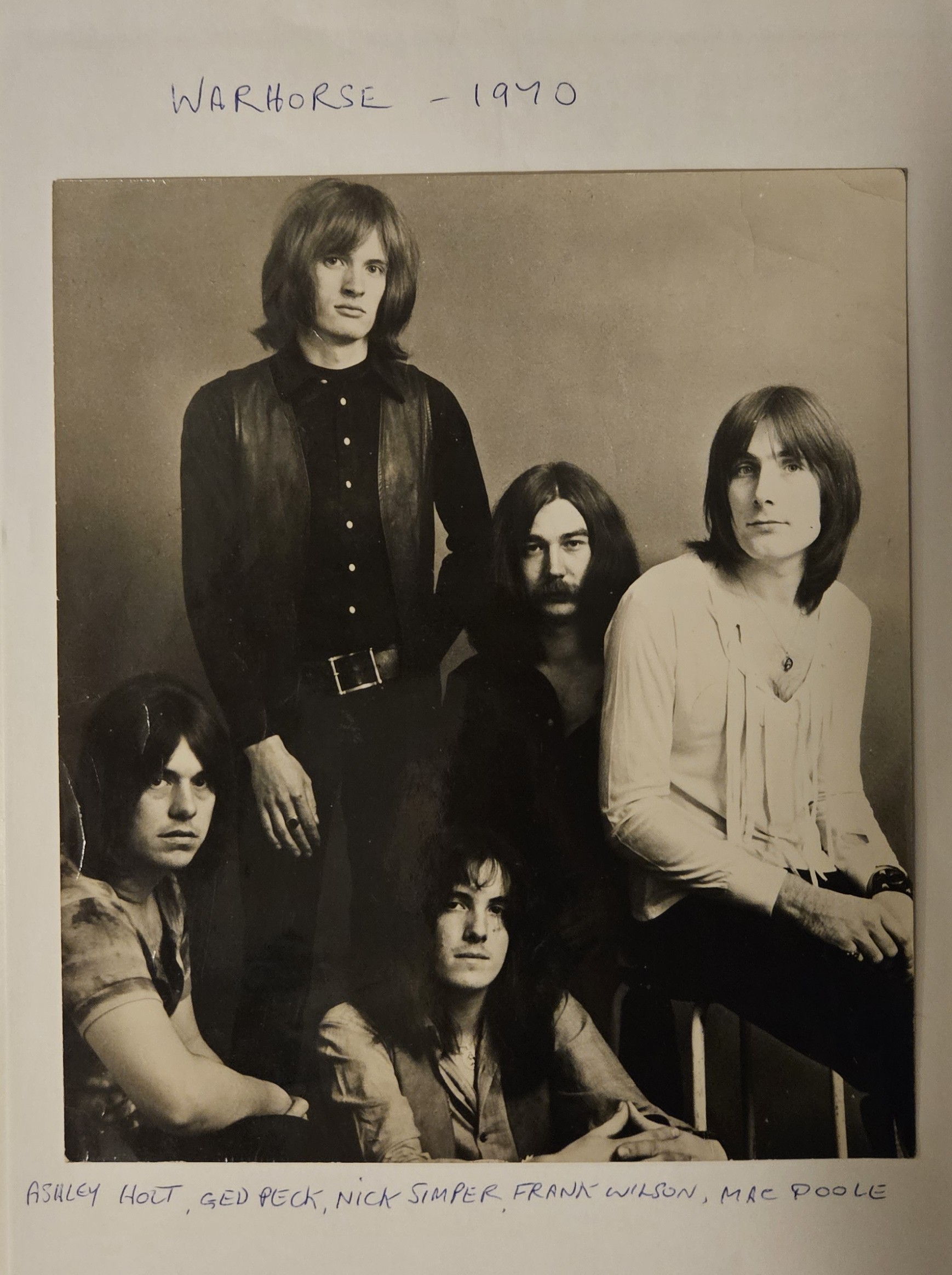
Following the finalising of the new group my life entered a particularly busy period. As well as regular shows with Marsha Hunt’s band, gigs also increased with Screaming Lord Sutch’s Savages which left very little time for organising the new outfit who by now had settled on the name Iron Horse. Rick Wakeman suggested weekly meetings at his parents’ home where he had the use of a piano. Sometimes we were accompanied by a young Australian songwriter named Gary Paige, who I had been introduced to at the Red Lion pub in Brentford. Gary was trying his luck in London and suggested that he could help us to write new songs. Rick, who often stayed in Reading (where his band residency was) sometimes overslept or appeared to “forget” about our rehearsals. Consequently the rest of us sometimes found ourselves waiting for Rick to show, while his mum kept us supplied with tea! By the end of 1969 we had made very little progress, so on January 7th 1970 I made my way very nervously to Ian Kimmet’s office at Feldmans Music Publishers in London’s Dean Street, for an overdue meeting.
Luckily Ian was still very enthusiastic about the project. He played me a few songs for possible singles and reinforced his original promise of total support from the company. To celebrate, the group held its first live rehearsal in order to see if it all worked. Trawling through a few standards that we all knew, it became obvious that the sound was big and powerful, a fact that really lifted us up as a result. The following week saw us convene at Rick’s home again, but, as had happened several times before, he didn’t show up. Rather annoyed, I managed to contact him by telephone and questioned his commitment to the project. Rick sounded upset and extremely apologetic, repeating several times that he was 100% with us! I was quite relieved to hear this. Even in those days he was showing the keyboard talents which eventually elevated him to the top, and having him on board was definitely a boost for the group.
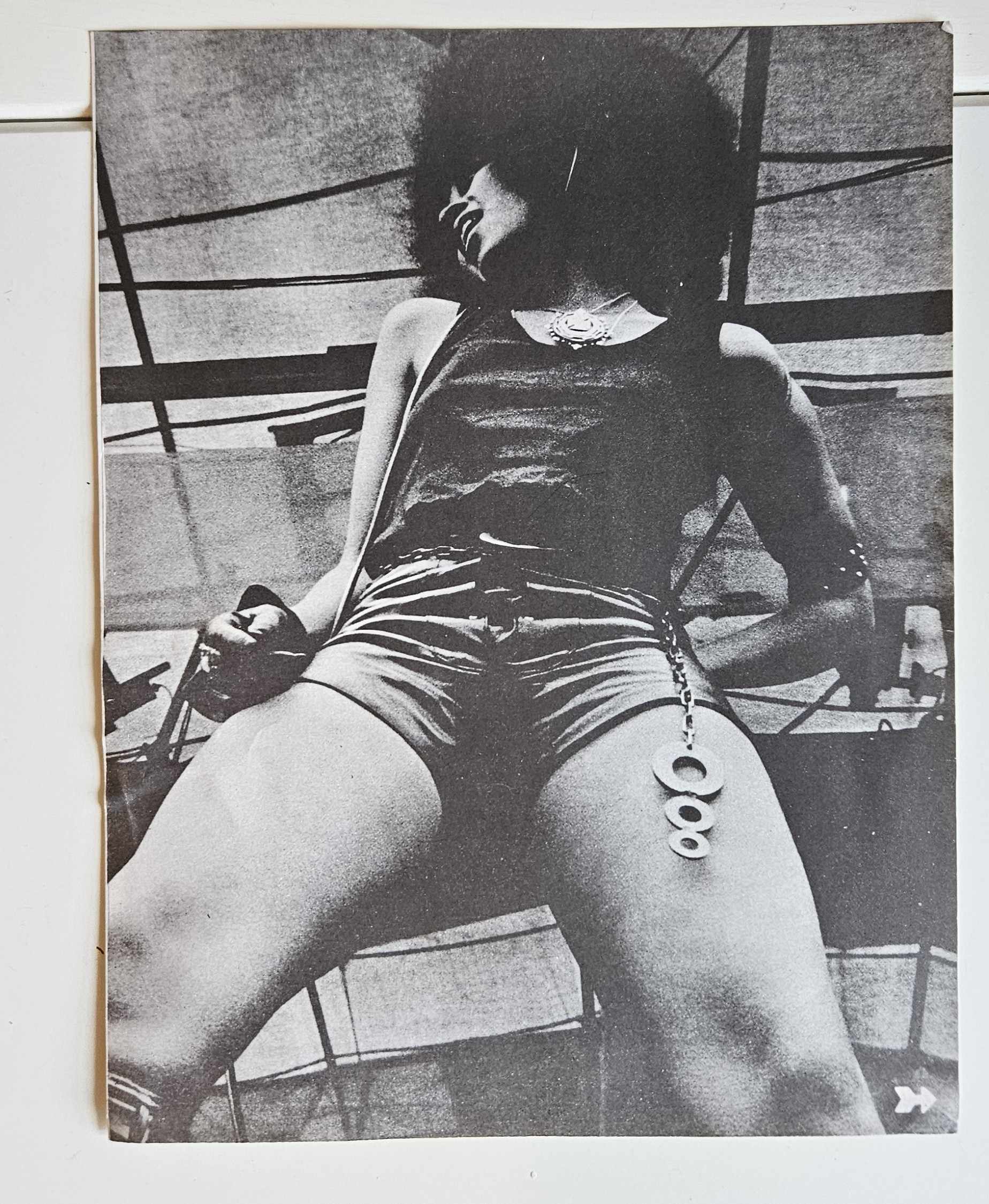
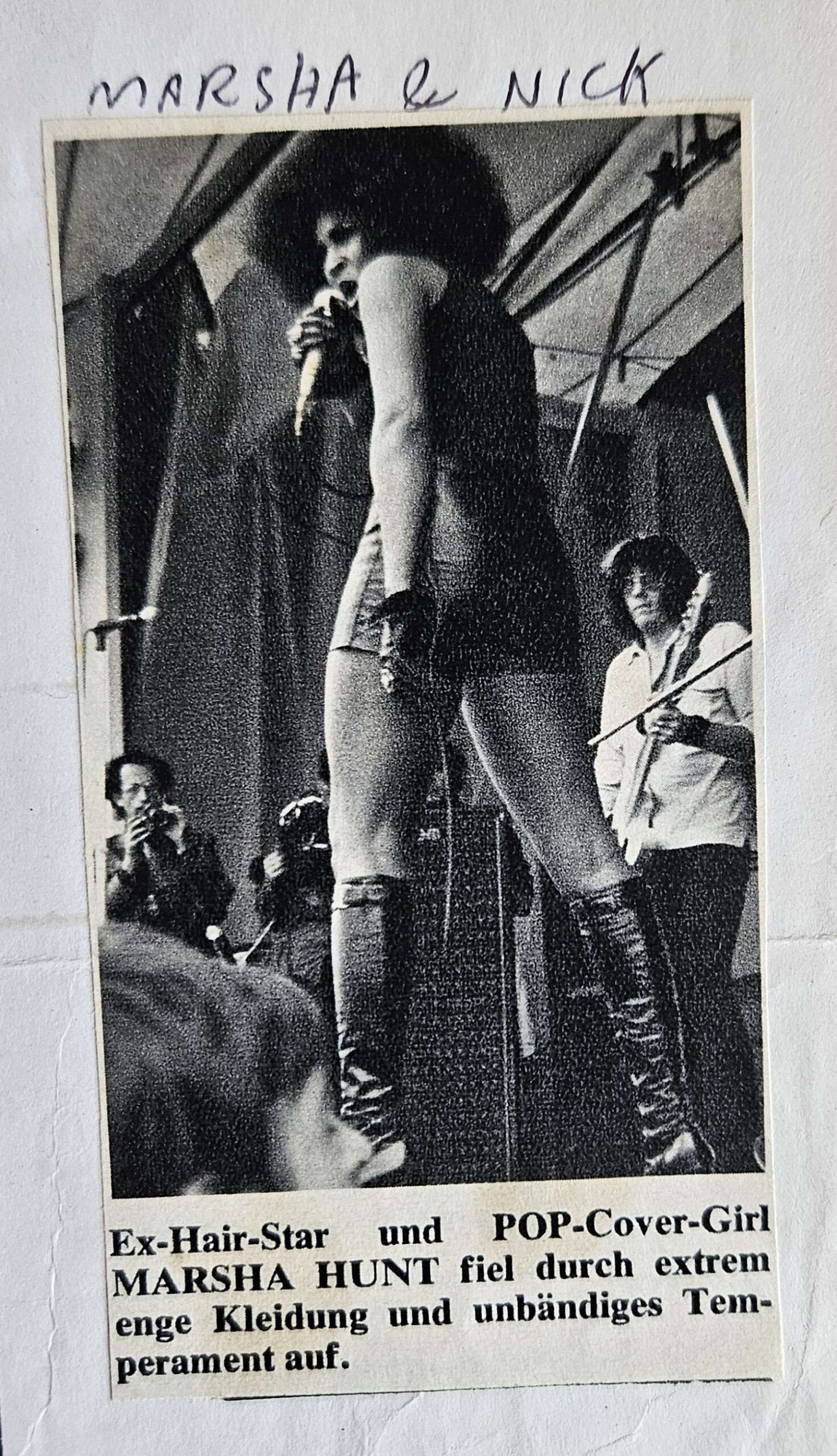
On January 16th the Marsha Hunt Band travelled to Scotland for three shows. The second gig was at a university which appeared to be very overcrowded and felt rather dangerous. As we waited to be announced I asked the stage manager where the security people were, to which he replied “We don’t have any”! My instinct was to leg it, but within seconds the band was announced and we launched into our opener, a raucous ditty penned by the band called ‘Burning’. The crowd, who appeared to be well fuelled with alcohol and other noxious substances were shouting for Marsha, and I must admit that my knees were knocking more than slightly, as I stepped up to the microphone to announce her! The wonderful site of Marsha in tight vest and even tighter hot pants seemed to send the crowd berserk, and it was with some difficulty that we made ourselves heard over shouts of “get ‘em off!”. Between songs Marsha bravely attempted to chat to the audience but was finding it difficult to make herself heard. Suddenly, without warning a fist came out of the crowd and connected with her face. Marsha’s immediate reaction was to flatten the owner of the fist with her microphone stand. That was the signal for the band to make a run for it as total mayhem ensued! As I left the stage I saw the bizarre site of my 100-watt amplification stack laying horizontally on top of an unconscious person who had received its full weight as it was pushed over! The details of our escape are now lost in the mists of time but without doubt we were lucky to avoid serious injury!!
Following our return from Scotland I was contacted by Gary Paige who informed me that a very successful Australian impresario that he knew was soon to arrive in London, and had expressed interest in meeting and possibly doing business with iron Horse. Gary arranged a meeting at the man’s Mayfair hotel, and we all made our way excitedly there at the appointed time. Gary had sold the group’s talents rather well and it was not long before we were asked about our keyboard wizard who was yet to appear. After half an hour the Australian cut the meeting short and we knew that he was not impressed! Needless to say, Rick did not show up! I drove to his parents’ house but he wasn’t there, so I left a note for him saying how we all felt, in no uncertain terms! The next day I received the usual apologetic phone call, but I explained that enough was enough. Why he acted as he did is a mystery, but of course things eventually worked out extremely well for him. The rest of the group were not about to stand still though, and it was decided to record some tracks without keyboards. With studio costs being rather prohibitive I decided to contact an old friend, Stuart Johnson, who ran a small studio in a converted garage at his home in Hayes. Stuart’s equipment was rather basic and consequently he operated the studio at very reasonable rates. Together with Gary Paige we had composed a little ditty called ‘Two Crows’ which we recorded on February 9th 1970, with our manic song ‘Burning’ as the ‘B’ side. The result was pretty rough but I took it to Ian Kimmet anyway, who in turn played it to his boss Ben Nisbet. Ben thought we showed promise and suggested we record at a better studio, at Feldmans’ expense, of course. The obvious choice was radio presenter Jack Jackson’s studio in Rickmansworth. I had made my very first recording there back in 1964 with Some Other Guys and knew that it would be a comfortable place to work. Everybody felt that we needed organ on the disc and Mac Poole immediately recommended a friend of his named Frank Wilson. Frank was currently recording an album with his band, called The Rumble, and Mac suggested that we drop by their studio in order to sound him out. Frank, a lovely affable bloke told us that he was committed to The Rumble and therefore not interested in joining iron Horse, but offered his services as a session player. We had to be content with that and so we made plans to begin recording at Jackson’s studio on March 24th.
Whilst we all agreed that Burning was a reasonable representation of the band, I figured that Feldmans would be more interested in hearing something a little bit more commercial so I suggested a tuneful pop song that I thought had potential. It had been sent with a bunch of songs from my friend Terry Slater in the U.S; he had recently left his gig as bassist with the Everly Brothers to work at a music publishers. The song that stood out was called ‘Miss Jane’, and the rest of the band agreed that it was worth a try. March 24th arrived and we all convened at the studio where, between the hours of 7 and 11 p.m. we managed to lay down two reasonable back-tracks. Before leaving we arranged to return on April 1st to finish off. The following weekend Mac, Ged and myself were back on the road with Marsha, playing Birmingham and Crewe. The Birmingham gig was attended by ace guitarist Jeff Beck who paid particular attention to Mac Poole’s drumming. As we prepared to leave after the show Jeff approached Mac saying “Put your drums in my car, you’re with me now”. Mac’s reply can’t be printed here, but I was pleased at his loyalty and relieved to see a dejected Jeff Beck swiftly depart!
When Wednesday April 1st arrived, my wife Janet awoke early to announce that she thought the birth of our first child was imminent, and she was taken to the local hospital. I was left behind, a little shell-shocked at the speed of events. In those days, unlike today when fathers are expected to be hands-on, it was strictly forbidden for the husband to be present! Nothing happened during the day time whilst Janet endured a lengthy labour period, so I gradually got myself together and prepared for the trip to Jackson’s studio. Just before leaving, at precisely 5:47 p.m. Janet gave birth to a lovely baby girl, who we named Jane. It seemed rather apt to be recording a song called ‘Miss Jane’ that same evening. I must admit to really being on a high as it sunk in that I was now a father! As we completed the recording it became obvious to us all that Frank Wilson was an extremely exceptional player. We had all hit it off with Frank and were extremely pleased when he announced that he would like to leave The Rumble and join us instead.
On the afternoon of Friday, April 3rd, Ged, myself, Mac and conga drummer Bobby Stignac were back in our Hanwell rehearsal room, waiting for Marsha to arrive with new material. Instead of a rehearsal, Marsha hit us with the unexpected news that she was folding the group and quitting the road, due to her being pregnant with Mick Jagger’s child! Even though Mac, Ged and I had been planning iron Horse from late ‘69, it came as rather a shock, being unexpected, and obviously we had planned a more gradual transition! Marsha thanked us for our service and gave us all a month’s wages to soften the blow. I had enjoyed a decent wage as her band leader and now, with almost zero income and being sole support for my wife and daughter, I knew that Iron Horse would have to move fast!
The new demos had been delivered to Feldmans and we waited for the reaction, hoping that it would be good. I picked up a couple of pub gigs with drummer Carlo Little, small money but very welcome. We also had a few gigs together with Screaming Lord Sutch who was still riding high on the strength of his ‘Heavy Friends’ album’s success. Hoping to emulate the success of that venture, following a couple of years living in the U.S., he announced an official comeback show at a London country club, scheduled for Sunday April 12th. Carlo and I were to be the usual rhythm section with other ‘famous names’ to be announced, the whole show to be recorded live for his next Heavy Friends album. The rest of the line-up included ex-Pirate Johnny Carroll on keys, with the great Sid Phillips on saxophone. The subject of lead guitar came up for discussion and Dave suggested Ritchie. I, of course, objected to sharing a stage with Blackmore and so suggested Albert Lee, explaining to Sutch that he was the player that Blackmore idolised. Sutch agreed to this, and all (I thought) was settled.
On the day of the gig I awoke with a severe head cold, feeling so grim I seriously thought that I would have to pull out of the gig. It was only the thought of playing with Albert that made me drag myself out of bed, although I felt like death! Imagine the shock then of arriving at the venue only to see Blackmore unloading his gear! I realised then that Sutch had pulled a stroke on me to make sure that I showed up! Setting up my bass rig I resolved to treat Blackmore with the contempt I felt for him. The venue was packed to the rafters with a capacity crowd including many famous faces, and there was a terrific support band in the form of Roy Young’s new outfit, who played a steaming set. Then the Savages took to the stand for a couple of openers before Johnny Carroll announced Dave Sutch. The crowd roared with enthusiasm as we tore through the usual set of rock ‘n’ roll standards, with Dave employing his usual props including the giant axe, a toilet seat, a pig mask ,a rubber chicken on a pole and other assaulted wonders!
As for myself, I felt so rough that I hardly played a decent note throughout the set, hoping that no one would notice. Towards the end of the gig Sutch made the mistake of inviting Keith Moon up to play. Keith was rather inebriated, and obviously in no condition to play, so from then on it was downhill all the way. With the show finally over I made my way outside, only to bump into Moon. “Would you like a drink, Nicky?”, Keith slurred at me. “I’d love one Keith, but the bars closed” I said. “My bar never closes!” replied Moon, followed by “Get in the car!”. I did as he said and sat in the rear of the large Bentley limousine that he shared with John Entwistle, where he opened a pair of polished walnut doors in the seat-back revealing a fully stocked bar. Suitably refreshed and feeling a little better, I made my way home, grateful to have got through the show, but sorry that my mundane performance had been recorded. Several days later I had a preview of the recording at Carlo Little’s home. To my immense surprise it sounded quite good! Sadly, when the finished album was released we discovered that Sutch had dubbed other people on at the studio, in order to get a few names on the front cover. So, the new ‘live’ album featured several artists who were not even there at the time! To add insult to injury, Carlo and myself were later advised by the Musicians Union that we should have been paid a much larger session fee for performing on a live recording. When we pointed this out to Dave Sutch, his response was to put both our names on the back of the cover in small print (with my name being mis-spelt) instead of on the front in large print. It was to be quite a while before we forgave him.

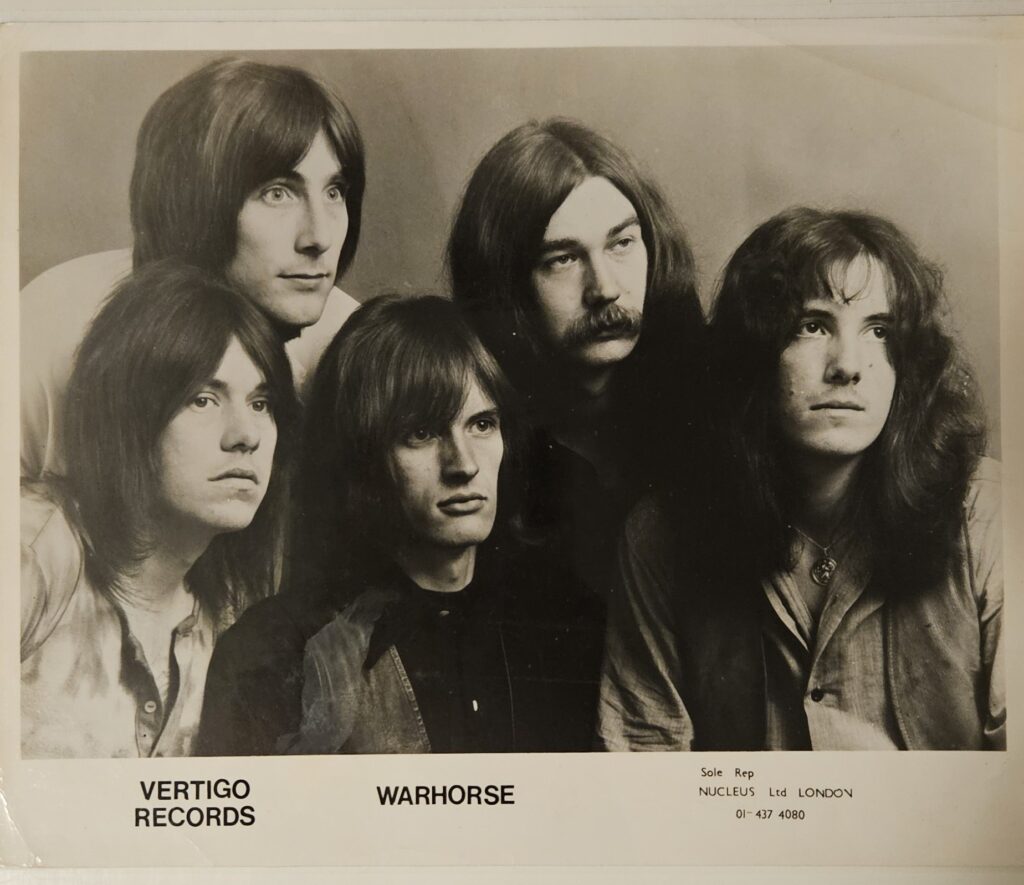
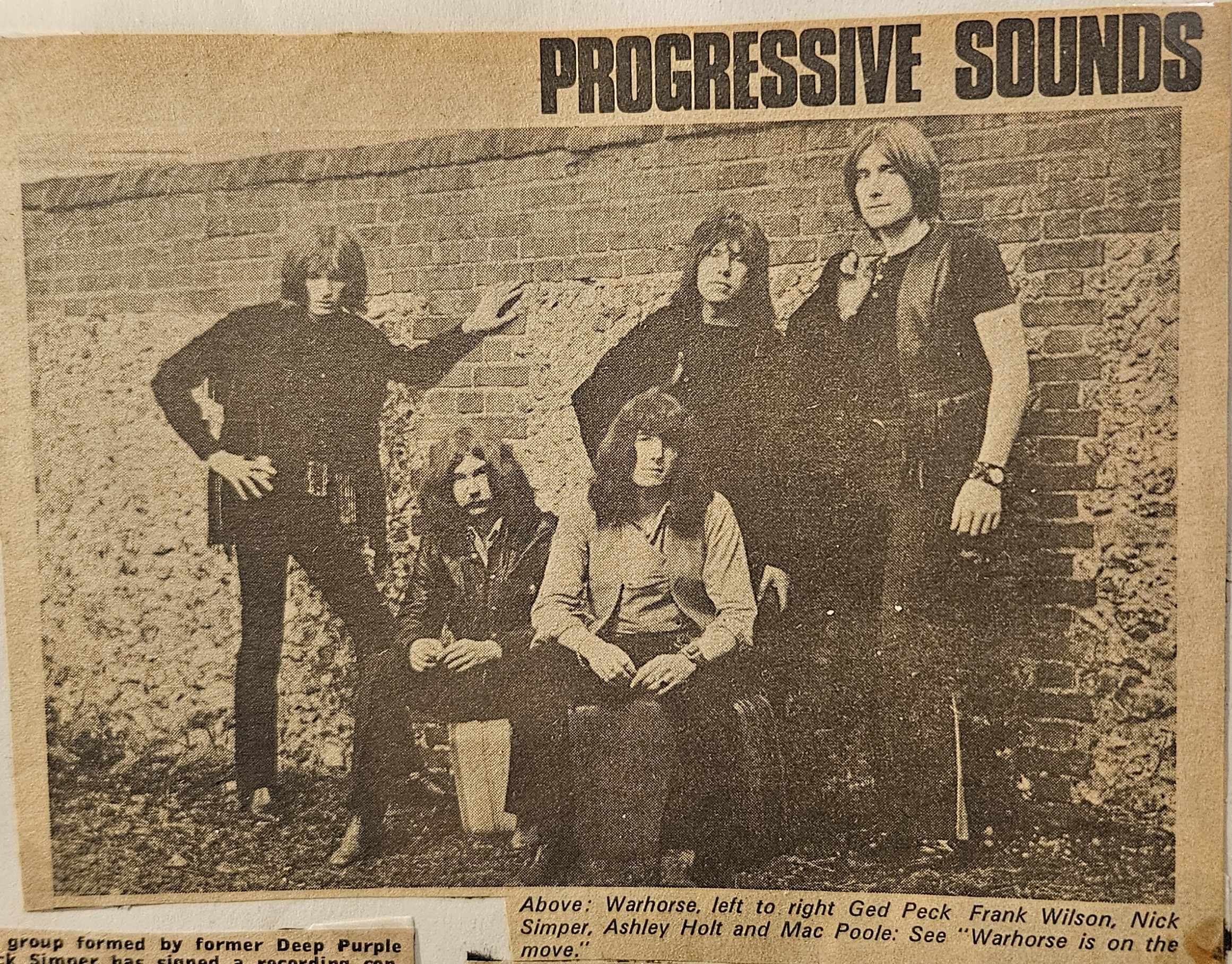
For the rest of the month the members of Iron Horse began to feverishly write and rehearse together, often at one another’s homes. Meanwhile we had heard from Ian Kimmet that’s our session at Jackson’s studio had been well received and they were talking to record labels on our behalf. Spurred on by this news, we spent May and June composing our first album tracks and attending several photo shoots. In between I somehow managed to play 24 gigs with Sutch (before our falling out), plus three studio sessions and a radio recording with James Royal, all of which provided a reasonable income. By July the new band was coming together nicely and we had begun regular live rehearsals where we could make some noise and work out our act. We had all reached the point where a cash injection was needed, so I managed to arrange for Feldmans to finance regular wages for the next few months. Word reached us that ex-Deep Purple manager Ron Hire had been released from prison. He had managed to recoup his original stake in the group and was now looking to get back in the business, so I set off to Ron’s Brighton home accompanied by Janet and little baby Jane. It was good to see Ron again, who had suffered a raw deal at the hands of his erstwhile partners! In no time at all we reached agreement and I left for London with a new manager. It was about this time when I discovered that the name Iron Horse was already in use in America. The band met at Frank Wilson’s home to discuss the situation when the name Warhorse suddenly came into my mind. We all agreed that this name gave us even more image possibilities and so the problem was solved.

Feldmans had also been busy and both Decca Records and Philips Phonogram visited our rehearsal room during June. Both labels offered us a deal, but we opted to go with Phonogram who were launching a brand new ‘progressive’ label called Vertigo. The enthusiasm surrounding this new venture was infectious and things began to move very quickly. By the end of July we had completed our first album at London’s Trident Studios with Ian Kimmet assisting production and in early August we travelled to a Buckinghamshire quarry to shoot the cover photograph. After discussing various ideas we had all agreed that recreating a First World War scene had great potential, so, just as dawn broke over the quarry the group, dressed in WW1 uniforms complete with tin helmets and rifles wandered about the landscape. The scene was littered with ammunition boxes, barbed wire and stuffed ‘dead’ horses. Ged Peck dominated the picture as he held the reins of the only live horse, whilst smoke bombs provided the look of authenticity. The cover made a huge impact on release and several other acts jumped on our bandwagon with album covers sporting war themes and war department print. Just prior to hitting the road Warhorse embarked on a series of rehearsals at the Blue Moon club in Hayes, where I had spent so many Sunday evenings whilst still a schoolboy, listening in amazement to the then still semi-professional Cliff Bennett and the Rebel Rousers.
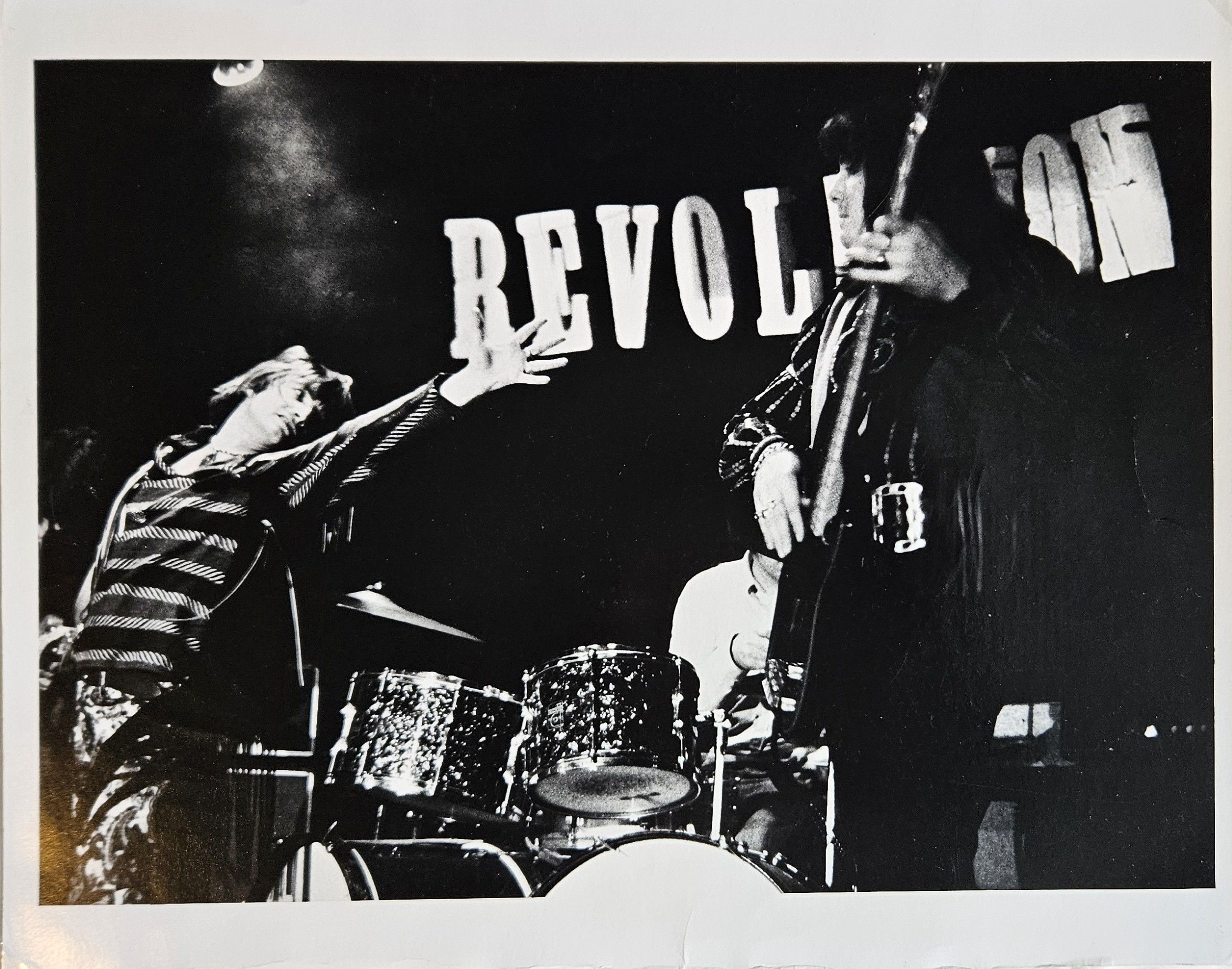
By now the band was absolutely red hot when we made our debut supporting Mott the Hoople. We received a great reception from the audience and at the end of the evening Mott’s singer, Ian Hunter, graciously congratulated us with the words “You people just cannot fail!”. From then on, we set off on the gig circuit including many colleges and universities which I had played with both Deep Purple and Marsha Hunt. This was a great period when I knew that the musicians of Warhorse had created something a little special and I knew that it was just as good as Deep Purple and maybe even a bit better! Like Purple we had an attitude of total confidence in our ability, regardless of who else was on the bill. The band exuded sheer power and panache which usually overpowered any opposition. The launch of our album, titled simply Warhorse was slightly disappointing as Vertigo chose to release many of their new acts on the same day, all sharing the advertising promotion, which I felt undermined the impact they should have made singularly. However, the reviews were good and it became a steady seller. Shortly after, Vertigo released a single from the album. Titled ‘St Louis’ it was a hard rock cover of the Easybeats song which we chose over Miss Jane to be a more suitable song for release. Everyone who heard St Louis thought it would be a hit, but apart from Holland and Switzerland it failed to chart. Radio 1 featured it in a program called The Round Table, where three disc-jockeys would discuss the new releases. Unfortunately for us, one of the guests was John Peel who accused us of ripping off Black Sabbath. Now we had never heard their records but apparently there was a vague similarity between the opening bars of both singles. Now, Peel did not consider the possibility that maybe Black Sabbath were influenced by us, but he made himself look silly by not realizing that we had faithfully copied the Easybeats intro, which had been written and recorded some five or six years before! For a top DJ to display such limited knowledge of the music scene spoke volumes. Now we knew that Peel without doubt absolutely hated Deep Purple, so I figured he probably hated Warhorse too!
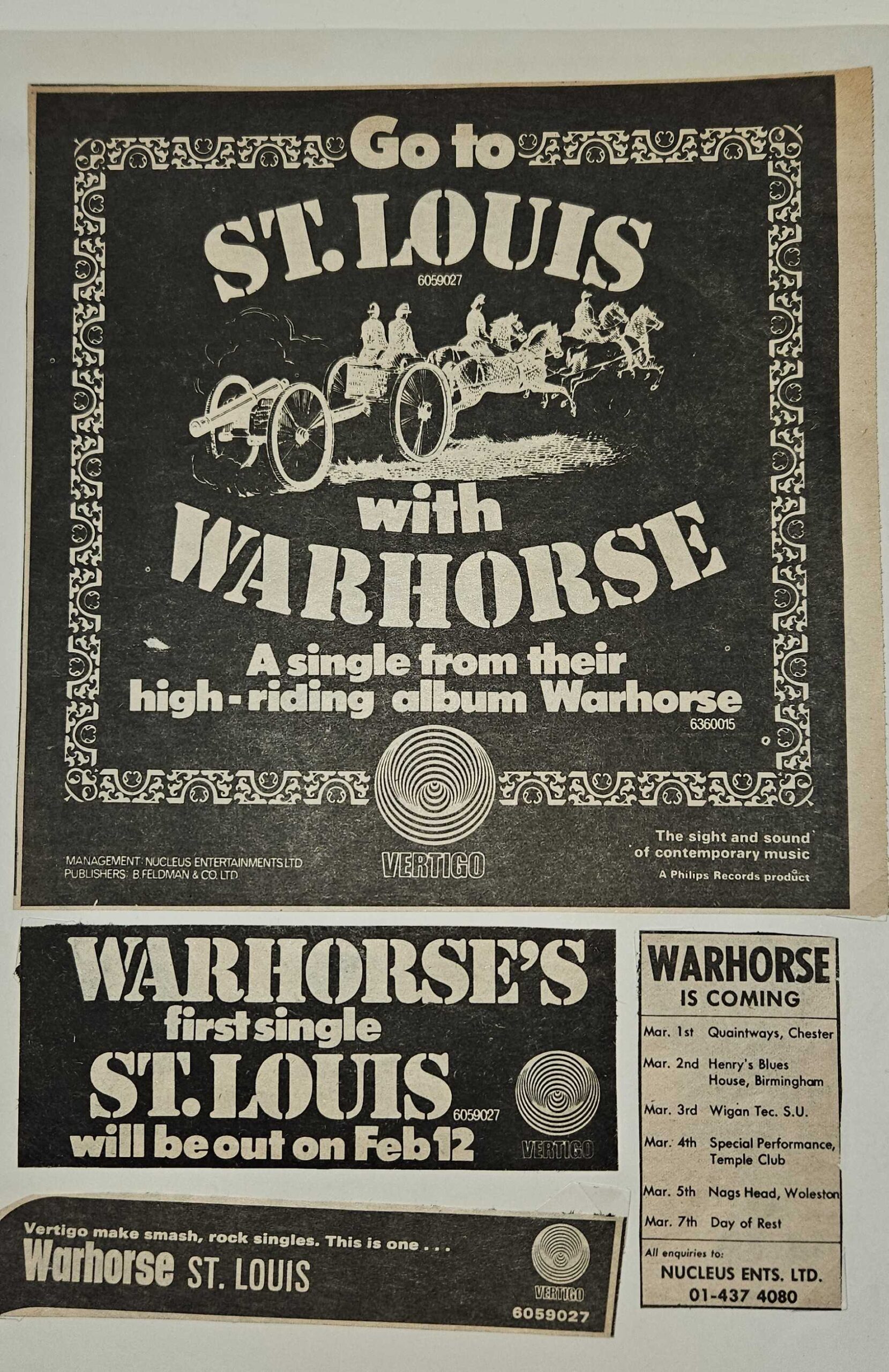
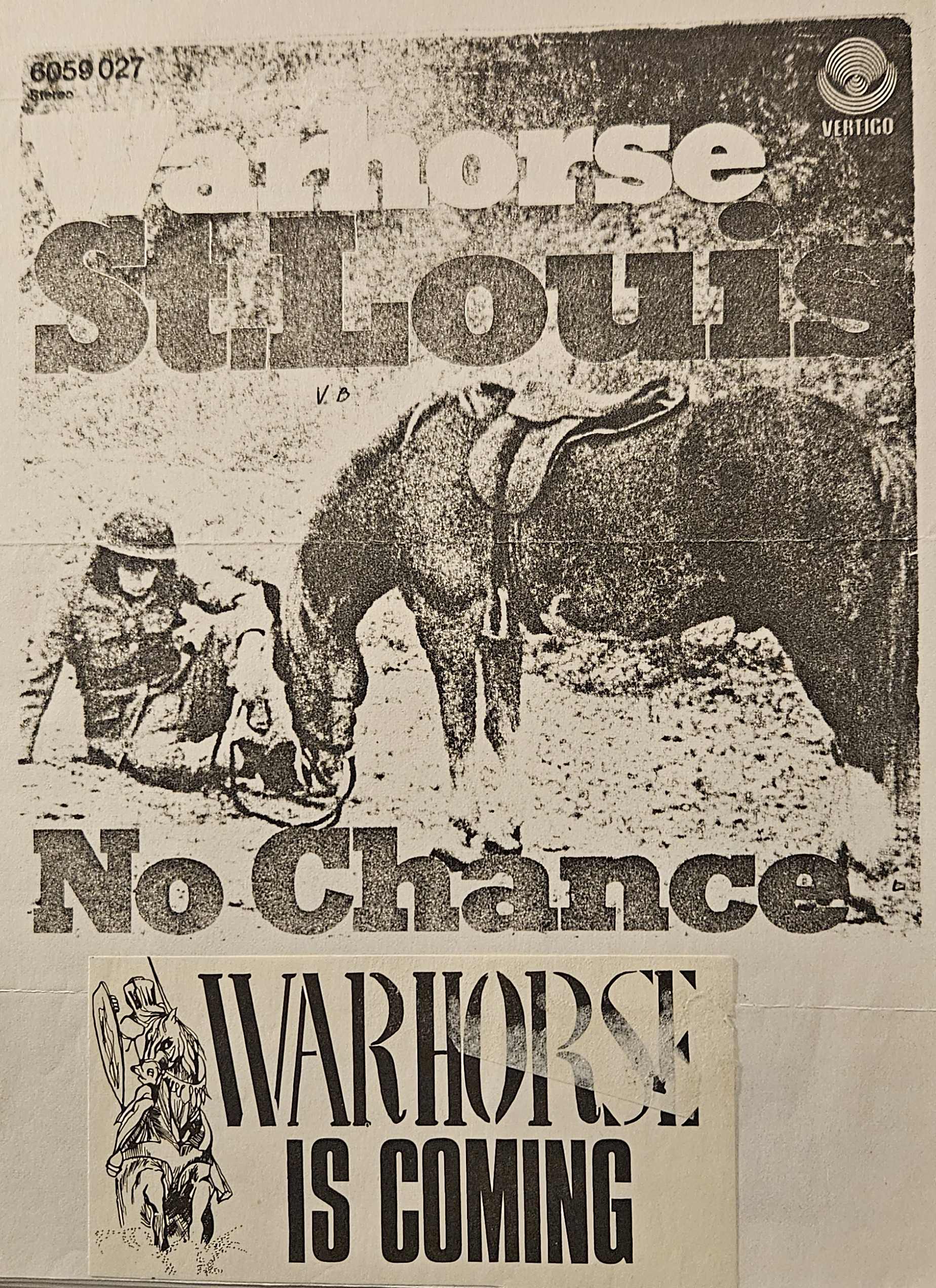
Meanwhile Ron Hire was immersing himself in his role as manager but confessed that he felt rather out of his depth. He suggested that he involve a partner who was more experienced, a man named Jeff Kruger. Kruger had a great pedigree, running his own record label and representing many big stars from the USA. His office was in Carlton Tower, and impressive London address which we visited many times. He also signed us to his agency, called Nucleus, which Ron joined, buying in as a shareholder, a rather unwise move I felt, as this deprived the band of the ready cash that Ron had promised us. This was pointed out to Kruger who guaranteed to underwrite necessary expenses if needed. He was very persuasive and confident so we all felt happy with the arrangement. Ron, meanwhile, joined the Nucleus office has a booker for the acts, with his emphasis being on Warhorse. Feldmans boss Ben Nisbet had also pulled off a deal to release our album in America with Warner Brothers who were fronted by Artie Mogul, the man responsible for Deep Purple’s success as head of Tetragrammaton. This gave us the message that we had a great chance to score in the U.S. Ashley Holt meanwhile had contacted a friend who had just started a new business of amplifier production. The amps were called Elgin and were absolutely first class, being hand built and extremely well finished. Ashley secured a great deal to acquire our whole backline, plus a PA system for cost price, in return for a credit on our album. To my surprise Feldmans agreed to advance the cash for the amps. At this point life could not be better, hitting the road with new gear, new record deals plus regular wages arriving, first from Feldmans then Jeff Kruger. Warhorse were up and running…